


Repetitive Transcranial Magnetic Stimulation (rTMS)

Repetitive Transcranial Magnetic Stimulation (rTMS) is an FDA-approved, non-invasive biological treatment for several mental health conditions. It is most commonly used in the treatment of Depression, Obsessive Compulsive Disorder (OCD), and negative symptoms of Schizophrenia, especially when medications and psychotherapy have not produced sufficient improvement.
Emerging clinical evidence also supports its use in certain cases of Bipolar Disorder, neurological conditions, Tinnitus, and post-stroke rehabilitation.
How rTMS Works?
rTMS is a non-surgical, outpatient procedure that uses an electromagnetic field—comparable in strength to an MRI scan—to deliver rapid magnetic pulses to targeted areas of the brain.
These pulses:
-
Stimulate specific brain regions associated with mood and behavior
-
Help regulate neural activity
-
Reduce the intensity and frequency of symptoms
The procedure is conducted while the patient is awake and comfortably seated. No anesthesia is required.
Treatment Duration
-
A typical course involves 20–30 sessions
-
Each session lasts approximately 20–30 minutes
-
Sessions are usually scheduled over several weeks
Consistency is important to achieve optimal therapeutic outcomes.
Safety and Side Effects
rTMS is generally well-tolerated. Most individuals experience minimal to no side effects.
Possible side effects may include:
-
Mild scalp discomfort
-
Temporary headache (in some cases)
-
Rarely, seizures (extremely uncommon)
Compared to Electroconvulsive Therapy (ECT), rTMS is:
-
Non-invasive
-
Does not require anesthesia
-
Associated with significantly fewer side effects
-
Does not cause memory impairment
While ECT remains highly effective for certain severe conditions, rTMS offers a safer and more convenient alternative for many individuals.
Maintenance and Follow-Up Care
For individuals with chronic or recurrent conditions, maintenance treatment may be recommended. This can include:
-
Periodic follow-up rTMS sessions
-
Ongoing medication management
-
Psychotherapy support
A personalized treatment plan is developed based on the individual’s clinical needs and response to therapy.
Biofeedback Mindfulness

Biofeedback is a scientifically supported, non-invasive therapeutic technique that helps individuals gain awareness and control over their body’s physiological responses to stress.
It is commonly used in the management of conditions such as Anxiety, ADHD, Stress, Depression, and certain psychosomatic disorders.
How Biofeedback Works
Biofeedback uses specialized equipment to provide real-time visual or auditory feedback about your body’s internal processes, such as:
-
Heart rate
-
Breathing patterns
-
Muscle tension
-
Body temperature
-
Skin conductance (sweating)
-
Blood pressure
By observing these signals, individuals learn to recognize how their body responds to stress and emotional triggers. Over time, they are trained to consciously regulate these responses, promoting relaxation and improved emotional control.
This process strengthens the mind-body connection and enhances self-regulation skills.
What Biofeedback Can Help With
Research has shown Biofeedback to be beneficial in managing:
-
Anxiety Disorders
-
ADHD
-
Depression
-
Irritable Bowel Syndrome (IBS)
-
High or Low Blood Pressure
-
Migraines
-
Chronic Pain
-
Stress-related conditions
-
In some cases, Post-Traumatic Stress Disorder (PTSD)
Advanced Biofeedback at Aarunya
At Aarunya, we use advanced biofeedback systems that monitor multiple physiological parameters simultaneously, including:
-
Heart rate variability
-
Breathing rhythm
-
Body temperature
-
Skin response (sweating patterns)
This comprehensive monitoring allows us to design personalized interventions tailored to your specific stress responses and therapeutic goals.
Session Duration
-
Each session typically lasts 30 to 60 minutes
-
The number of sessions varies based on:
-
The condition being treated
-
Severity of symptoms
-
Individual learning pace
-
Your therapist will create a customized treatment plan based on your needs.
Safety and Suitability
Biofeedback is considered extremely safe and non-invasive. However, a professional consultation is necessary to determine whether it is the most appropriate treatment option for your condition.
We encourage you to discuss your concerns with a trained mental health professional before beginning therapy.
{“fontSize”:”large”} –>
Electroconvulsive Therapy (ECT)
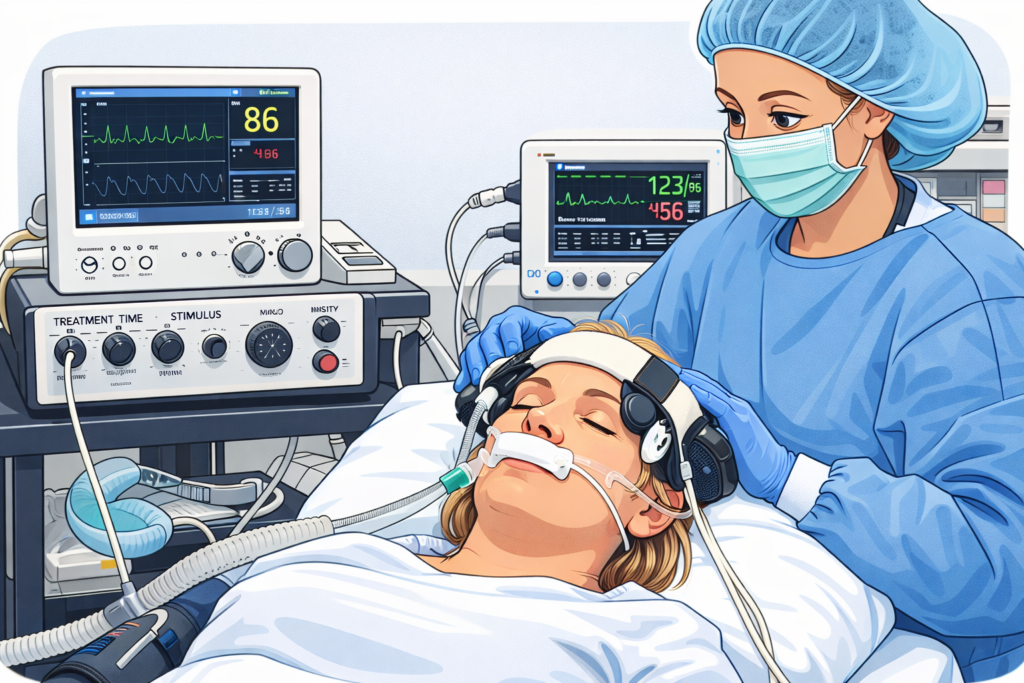
Electroconvulsive Therapy (ECT) is a safe and medically supervised treatment performed under general anesthesia. During the procedure, a carefully controlled, small electrical current is passed through the brain to intentionally trigger a brief, therapeutic seizure.
The patient remains asleep throughout the procedure and does not feel pain. Muscle relaxants are administered to ensure safety and comfort.
How ECT Works
ECT works by stimulating specific brain circuits involved in mood, thinking, and behavior. This stimulation leads to the rapid release and regulation of key neurotransmitters (brain chemicals) that are often disrupted in severe mental health conditions.
Unlike medications, which may take weeks to show improvement, ECT can produce faster clinical response, particularly in severe or treatment-resistant cases.
When Is ECT Recommended?
ECT is often considered when:
-
Other treatments (medication and psychotherapy) have not been effective
-
Rapid symptom relief is urgently needed
-
The condition is severe or life-threatening
It is commonly used in:
-
Severe or treatment-resistant Depression
-
Mania
-
Schizophrenia
-
Catatonia
-
Acute suicidality
ECT is also considered a suitable option in certain special populations, including:
-
Older adults
-
Pregnant individuals (when medication options are limited)
Addressing the Stigma
ECT is sometimes misunderstood due to outdated practices from decades ago, when high-voltage electricity was administered without anesthesia. Those older methods led to discomfort and side effects, contributing to the stigma around “shock treatment.”
Modern ECT is highly controlled, evidence-based, and significantly safer. It is administered under anesthesia with muscle relaxants, continuous monitoring, and strict medical protocols to ensure maximum benefit with minimal risk.
Safety and Side Effects
ECT is a well-researched and effective treatment. Possible side effects may include:
-
Temporary confusion immediately after treatment
-
Short-term memory disturbances (usually reversible)
-
Mild headache or muscle soreness
Your psychiatrist will carefully evaluate whether ECT is the most appropriate option based on your clinical condition.